

Key Takeaways
- Rimless glasses attach lenses directly to the temples and nose bridge, with no frame around the lenses.
- They often feel light on your nose and ears and keep frame edges out of your side vision.
- Exposed lens edges may show smudges sooner and need careful handling plus a storage case.
- Stronger prescriptions may work better in semi-rimless or full-frame styles.
- A fitting with your eye doctor in Verona, WI, can help match lens material to your daily routine.
By 3 PM, you can feel exactly where your frames sit. Two sore spots on the bridge of your nose, a little ache behind each ear, and the urge to slide them up onto your head just for a minute of relief. If that sounds like your afternoon, you’ve probably wondered whether glasses have to feel like something you’re wearing at all. Our team at Verona Vision Care hears this question often, especially from people who spend their days moving between screens, carpools, and errands.
Rimless glasses can be a good fit if you want a light, low-profile pair with an open field of view, though they ask for careful handling and may not suit every prescription or every lifestyle. Trying on a few styles from the selection of frames and lenses is often a fast way to tell.
What Are Rimless Glasses?
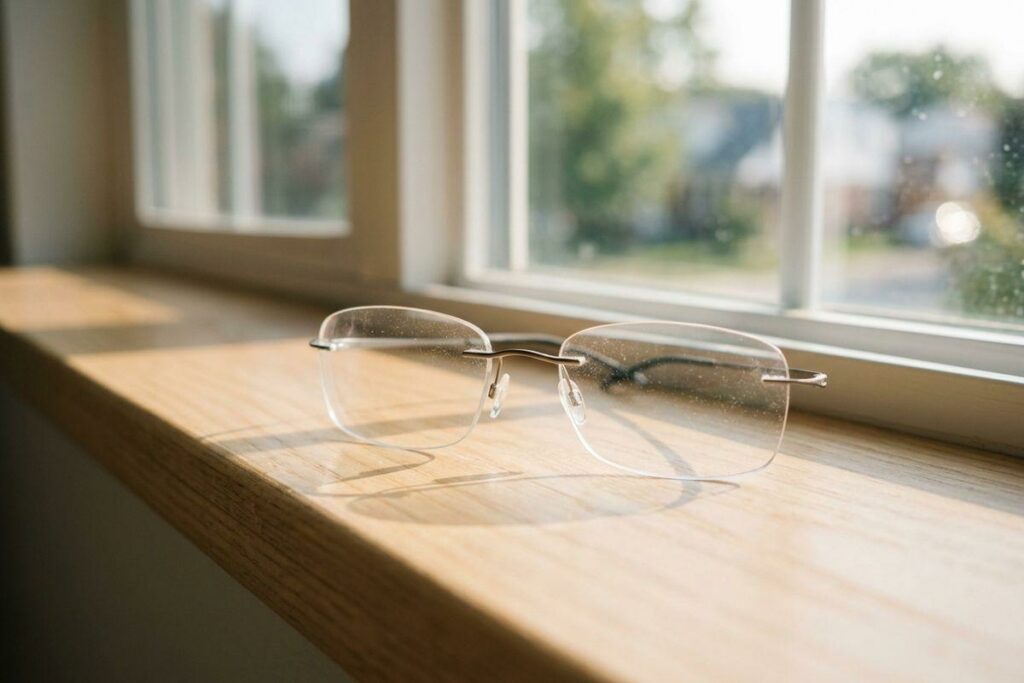
Rimless glasses skip most of the frame entirely. The lenses connect straight to the temples, the arms resting over your ears, and to a small nose bridge in the middle. There’s no rim circling the lens edge, so what you mostly see on someone’s face is the shape of the lenses themselves.
There’s also a middle option. Semi-rimless glasses keep a rim across the top of the lenses and leave the bottom edge open, which gives you a bit more structure while still feeling airy. You can compare both styles in person at the Verona office, no appointment needed for frame browsing.
Why People Choose Rimless Glasses
Lightweight Feel
Without a frame around each lens, there’s simply less weight pressing down. Many wearers notice fewer marks on the nose and less pinching behind the ears after a long day of meetings, errands, and evening reading.
Clear, Open View
No frame edge sits in your side vision. When you glance at your mirror while merging onto the highway, or scan from your monitor to your notepad, there’s no dark line crossing through the view. Readers and heavy screen users often notice this difference right away, especially if lens options for digital eye strain are already part of the conversation.
Style That Fits Anywhere
Rimless glasses tend to move easily between a school pickup line and a client presentation. They keep the attention on your eyes and cheekbones instead of the eyewear, and you still get plenty of lens shapes to choose from, including rounded, rectangular, and softly squared.
Things to Keep in Mind Before You Switch
Rimless glasses do ask a little more of you. Tossing them loose into a purse or leaving them lens-down on the counter isn’t a good habit here, so a hard storage case earns its keep. Exposed lens edges may also collect fingerprints and smudges where a frame would normally hide them, which means you’ll reach for your cleaning cloth more often. Color and design choices are often also more limited compared with bold plastic frames.

Cost and Upkeep
The lenses are drilled or notched so they can attach to the mountings, which is precise work. Because of that, repairs or replacements can cost more than swapping a standard frame. Small adjustments now and then also help keep the temples sitting evenly.
Durability of Modern Materials
Mountings are often made from titanium, stainless steel, or magnesium, all of which hold their shape while staying light. Pairing them with impact-resistant polycarbonate or Trivex lenses adds strength where the lens meets the hardware, which matters if you’ve ever needed urgent care for an eye injury after a mishap at work or home.
Who Rimless Glasses Suit Well
Rimless glasses tend to flatter softer facial features you’d rather show off than cover up. They’re also a comfortable landing spot if you’ve always found frames too heavy or too noticeable, or if you’re a contact lens wearer looking for a break that doesn’t feel bulky.
When Another Style May Work Better
Stronger prescriptions call for thicker lenses, and thicker edges can look and feel bulky without a rim to frame them. Semi-rimless glasses often work as a middle ground in that case. Higher amounts of astigmatism can add to lens thickness too. If your days involve dropped glasses, dusty job sites, or a toddler grabbing at your face, a full frame may be the sturdier choice.
How to Pick the Right Pair
Bring the details of your real life to the fitting. Hours at a laptop, weekend gardening, pickleball, long drives at dusk, all of it shapes the recommendation. Your current prescription guides lens material choices, and a proper adjustment keeps the temples from feeling tight above your ears. If your prescription is a year or more old, a comprehensive eye exam is a smart first step.
Care Tips for Rimless Wearers
- Take your glasses off with both hands, gripping each temple, so the mountings aren’t twisted.
- Clean the lenses regularly with a microfiber cloth made for glasses.
- Store them in a hard case whenever they’re off your face.
- Stop in for a periodic fit check to keep everything sitting straight.
Come Try Some On
Our team at Verona Vision Care can help you compare rimless, semi-rimless, and full-frame options side by side, then match the lenses to your prescription and your schedule. Ask about prescription sunglasses for those long drives at dusk while you’re there. Book an eye exam and frame styling visit today, and try a pair on to see how light it feels.