

Key Takeaways
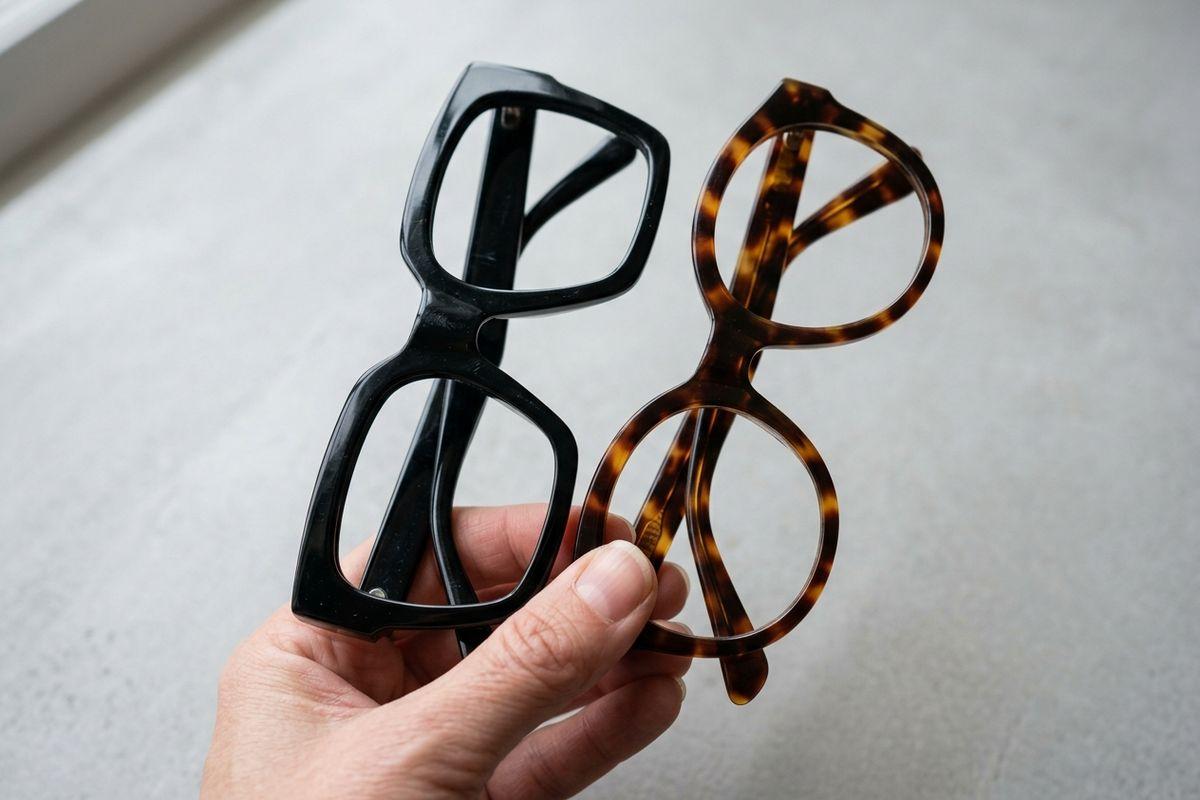
- Oversized frames have larger lenses and wider frame fronts, and the same pair can look different on each face.
- Compare your forehead, cheekbones, and jawline to find your closest face shape.
- Angular frames add structure to round faces, while softer curves balance square faces.
- Your pupils should sit centered in each lens, and the lower rim should stay above your cheeks.
- Thin rims, light colors, and lightweight materials help keep big frames comfortable.
You spot a pair of oversized frames on a shelf at Verona Vision Care, slide them on, and suddenly you look like a completely different person. Sometimes in a good way. Sometimes the lenses swallow half your face and slide down your nose before you reach the mirror.
Choosing oversized glasses comes down to two things: matching the frame shape to your face shape and checking the fit across your nose, brows, and cheeks. Once you know what to look for, that shelf full of options gets a lot less overwhelming.
What Makes a Frame Oversized
Oversized frames stand out for their larger lenses and wider front frames. They cover more of your face than a standard pair, which is exactly why people love them.
Here’s the tricky part. A frame labeled “oversized” in a catalog might fit one person comfortably but overwhelm another. The width across your face, the height of your cheeks, and where your brows sit all affect how the same pair reads.
Bold style still needs balanced proportions. The goal isn’t a bigger frame, it’s a large frame that fits your features.
How to Find Your Face Shape
Stand in front of a mirror and pull your hair back. Look at 3 things: how wide your forehead is compared to your jawline, whether your cheekbones are the widest part of your face, and how your face length compares to its width.
That quick check tells you most of what you need to know before you start trying frames on.
Common Face Shapes at a Glance
5 shapes cover most faces: oval, round, square, heart, and diamond. Most faces blend 2 of them, so you may see a little square in your jaw and a little heart in your forehead.
Pick the closest match rather than hunting for an exact one.
Oversized Frame Picks by Face Shape
Once you have your shape, frame styles start narrowing themselves down.
Round and Oval Faces
If your face is round, square, rectangular, and geometric shapes add structure and definition. Straight lines contrast with soft curves.
Oval faces have room to play. Wide, bold shapes tend to work well, so lean into the styles you’re drawn to.
Square and Heart Faces
Square faces pair nicely with rounded or oval lenses, which soften a strong jaw and angular cheekbones. Think curved edges instead of sharp corners.
Heart shapes benefit from frames with wider lower rims. The extra width along the bottom balances a broader forehead.
Diamond Faces
Oval, rimless, and browline styles suit diamond-shaped faces. They soften angles and help balance prominent cheekbones without competing with them. The same shape logic applies when you shop for prescription sunglasses.
Fit Checks Before You Buy
Style gets you interested. Fit decides whether you actually wear them.
Check that your pupils sit centered in each lens, your brows stay visible above the top rim, and the lower rim rests above your cheeks. Those 3 checks can catch common fit problems in about 10 seconds.
Signs the Frames Are Too Big
- The lenses touch your cheeks when you smile.
- The frames slide down your nose repeatedly.
- The temple arms flare out.
Bridge and Temple Comfort
Larger frames carry more weight, so that weight needs to spread across your nose and ears instead of landing in one spot. After a few minutes of wear, you shouldn’t see red marks or feel pinching behind your ears.
Small nose pad adjustments from the optical team can change how a pair feels for the rest of the day.
Style, Color, and Lens Tips for Big Frames
Not every oversized pair makes a loud statement. Thin rims and lighter colors read subtler, which helps if you want the size without the drama. Bold colors and thick rims do the opposite.
Material matters too. Lightweight acetate and titanium help keep big frames from feeling heavy by mid-afternoon.
If you wear progressive lenses, ask about lens height in taller frames. There’s more vertical space to work with, and our optical team can talk through how that affects your reading area.
How to Get Personalized Help
Try several shapes side by side rather than one at a time. The differences jump out when you compare.
An eye exam with an eye doctor in Verona, WI, keeps your prescription current, and our team can adjust your chosen frames so they sit right on your face.
Find Frames You Actually Love Wearing
Oversized glasses should feel like they belong to you, not like you’re borrowing someone else’s face. Our team at Verona Vision Care can help you compare shapes, check the fit, and fine-tune the details.
Book your next eye exam at Verona Vision Care and bring your style questions along.