

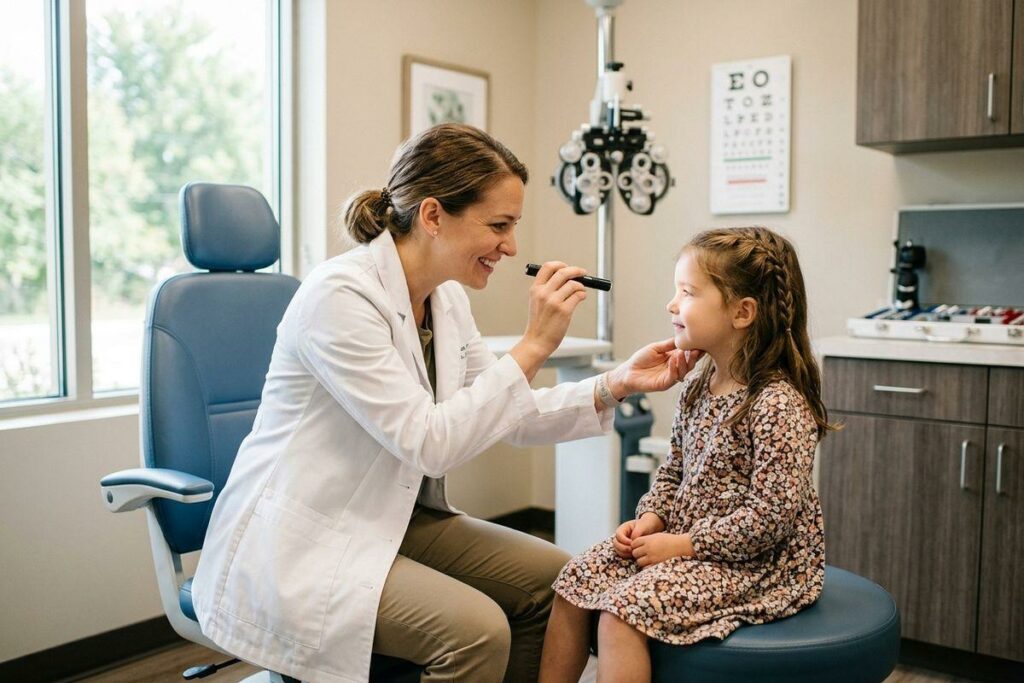
Your child’s eyes are meant to work as a team. They move together to follow a ball across the yard or land on the same word in a picture book, and the brain blends what each eye sees into 1 clear image.
Sometimes one eye points in a different direction from the other. Optometrists call this strabismus, and it affects about 1 in 20 kids. When the eyes don’t line up, the brain can struggle to blend two pictures into one clear image, which is why early evaluation is important for supporting your child’s visual development. We check alignment during every one of our children’s eye exams, so you’re in good company if it’s been on your mind.
When Alignment Usually Settles
It’s normal for a newborn’s eyes to wander occasionally. Their eye muscles are still building coordination in the first few months, so an occasional cross or drift is typical at this age.
Around 4 months, your baby’s eyes should start working together and following toys as you move them. If you still see a turn by 4 to 6 months, bring it up with your optometrist.
Strabismus vs. Pseudostrabismus
Some babies’ eyes only look crossed. A wide, flat nose bridge or a small fold of skin near the inner eye can cover part of the white, which makes a healthy eye seem to turn in. This is called pseudostrabismus, and most kids grow out of it as their face develops.
Your optometrist can shine a small light at your child’s eyes and watch where the reflection lands. When it sits in the same spot on each eye, the eyes are lined up.
Common Causes of Crossed or Drifting Eyes
Sometimes the tiny muscles around each eye don’t pull with equal strength, so one eye wanders while the other stays centered.
Uncorrected farsightedness is another common cause. Kids with farsightedness work harder to focus up close, and their eyes can cross from all that extra effort.
Some kids have a higher chance of developing an eye turn, so keep a closer watch on your child’s alignment if they have any of these risk factors:
- Premature birth
- Low birth weight
- Certain brain or nerve conditions
- A parent or sibling with strabismus
Screen time isn’t a known cause of eye turns, though long stretches on a tablet can tire young eyes.
Signs Parents Can Watch For at Home
Watch how your child’s eyes move during everyday activities, and look for signs such as:
- One eye turning in or out
- Tilting their head to look at something
- Squinting or closing 1 eye in bright sunlight
- Sitting close to the TV
- Holding books up near their face
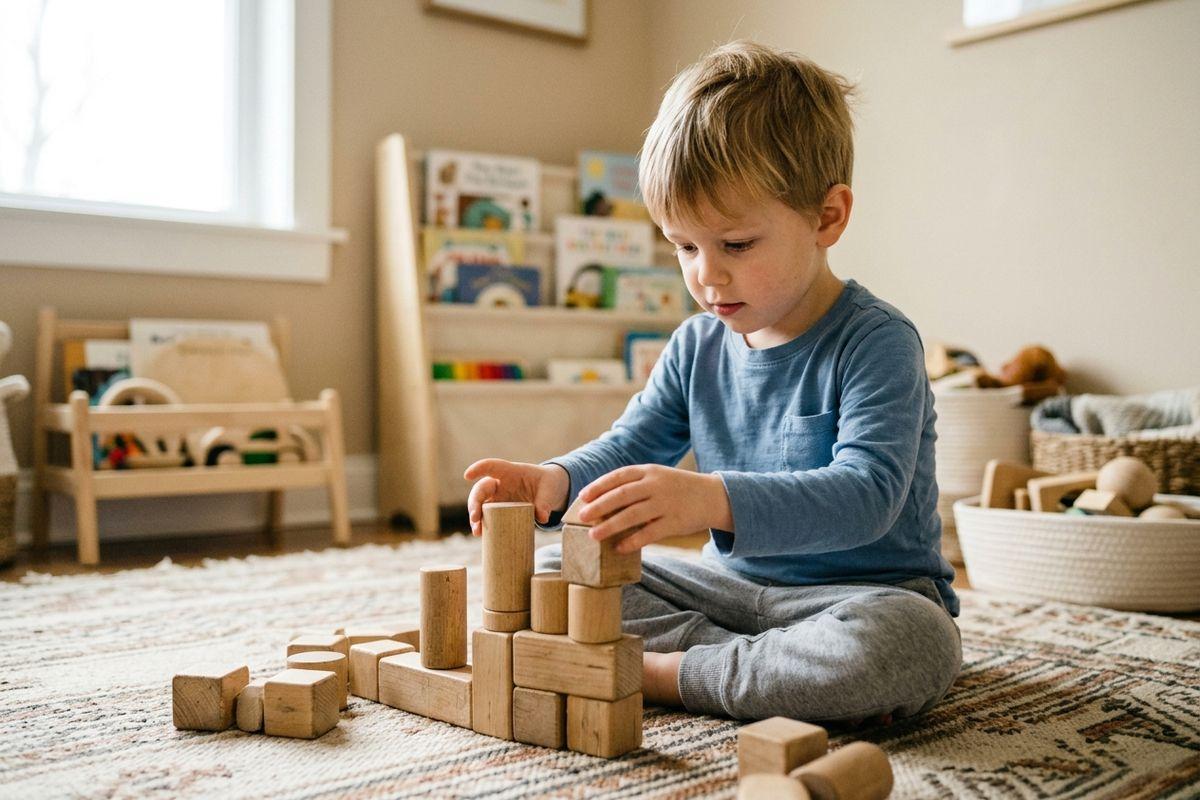
Little ones can’t always tell you what they see, so their behavior can give you clues. A child might bump into furniture on one side or knock over a cup when they reach for it. Older kids may complain about headaches or seeing double after reading for a while.
How Optometrists Check Eye Alignment in Children
Your optometrist picks tests that fit your child’s age, so even babies and toddlers who can’t read letters get a thorough check.
“One test we may use is the cover test. Your optometrist covers and uncovers each eye, then watches how it moves as it settles. This can reveal a small drift that’s hard to spot at home.
Dilating drops can relax the focusing muscles for a short time so we can measure your child’s true prescription.
Why Early Checkups Matter
An eye turn can lead to lazy eye, also called amblyopia. If the brain ignores the turned eye for too long, that eye’s vision may not develop the way it should.
Early treatment is important because vision develops rapidly during childhood. Identifying and treating amblyopia as early as possible can improve the chances of better visual outcomes.
Treatment Options for Eye Alignment Issues in Kids
The right treatment plan depends on the cause of the eye turn, your child’s vision, and how their eyes work together. Depending on the diagnosis, your optometrist may recommend one or more of the following:
- Glasses: May help correct farsightedness that contributes to an inward eye turn.
- Patching: Covering the stronger eye may help improve vision in the weaker eye when amblyopia (lazy eye) is present.
- Eye drops: Certain drops can temporarily blur vision in the stronger eye as an alternative to patching for some children with amblyopia.
- Vision therapy: May be recommended to develop specific visual skills and improve coordination between the eyes, depending on the child’s condition.
- Eye muscle surgery: May be considered when surgery is needed to improve eye alignment.
In some cases, patching and vision therapy may be used together as part of a child’s treatment plan. Regular follow-up appointments help your optometrist monitor progress and determine whether any adjustments are needed.
Tips for Making Eye Patching Easier
Getting young children comfortable with wearing an eye patch can take some patience.
- Save a favorite show or puzzle for patch time
- Let your child decorate the outside of their patch with stickers
- Tell teachers and caregivers about the patching schedule
Helping Your Child’s Eyes Work as a Team
You know your child better than anyone, so trust your gut when something about their eyes seems off. An eye exam can help you find out whether it’s a true eye turn and what to do next.
At Verona Vision Care, we take the time to listen to your questions and build a plan that fits your child and your family. Book an appointment today, and let’s take a look together.